
Password Purgatory, a C# Scammer Trap
Posted on March 22, 2026 • 2 minutes • 339 words
Table of contents
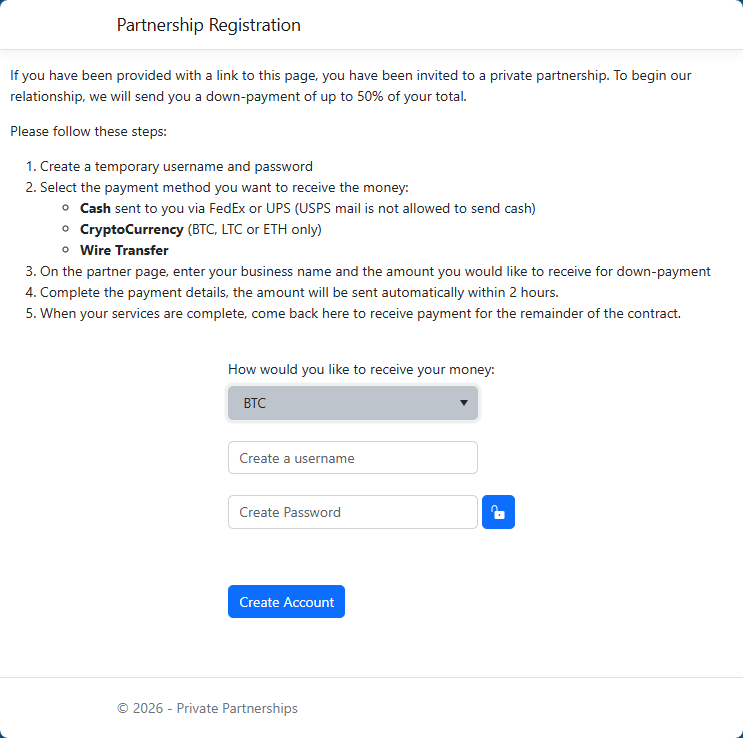
This is a reimagined version of Troy Hunt’s Password Purgatory ; written as a dotnet app and automatically published to Azure. It is not a 1:1 recreation of Troy’s, but maintains its spirit, see all the source code on GitHub at dotnet-password-purgatory
Just imagine, thousands of dollars is only a button click away, but your password keeps failing because of with the following rules:

- First entry form seems normal, some standard client-side validation to make sure I complete both fields.

- Okay, so I didn’t have a number in my password…

- Whoops, maybe I shouldn’t have just jammed a “1” on the end of the password…

- Ugh, okay, an upper-case character (starting to feel annoyed).

- This seems my own fault, nothing lets you use short password anymore.

- Wait, what? This is starting to seem like I’m being given the run-around… but adding ‘dog’ to the end is easy enough…

- Really, cat? Okay, three letters, lets add it and keep going because I want to see where this is going.

If they keep going…
- “Password must contain at least 1 primary Simpsons family character (case sensitive).”
- “Password must contain at least 1 primary Griffin family character (caps sensitive).”
- “Password must contain at least one common emoticon (examples: =], :), :p)”
- “Password must be a number divisible by 3 (when stripped of non-numeric characters).”
- “Password must contain at least one name of a moon in the solar system (case sensitive).”
… and, then, it gets much worse from here 🤣
Go ahead and try it, see how far you get https://partnership.dvlup.com/ (you already have a headstart).
Educational Takeaways
Why would I bother doing this? there are some great lessons to learn while implementing and deploying it. This is a .NET Blazor app, published as an Azure Container app.
- A CI-CD example that automatically publishes updates, see workflows/publish-az-container-app.yml
- A decision tree, right inside the functional “Check” class see PasswordPurgatory.Web/Models/Check.cs
This wasnt a huge effort, but it is still giving me plenty of laughs and I hope you take away something in the journey.